I took two weeks off. Before leaving, we put a playtest build in players' hands and left it running.
We came back to a host of recorded playthroughs and a stack of notes in the Discord, and one signal came through louder than the rest. Stage 1 is awesome and addictive. Stage 2, the Viridian Storm, was too hard. Not hard-interesting. Hard-unfair. So most of the month went into fixing that, plus a few extras.
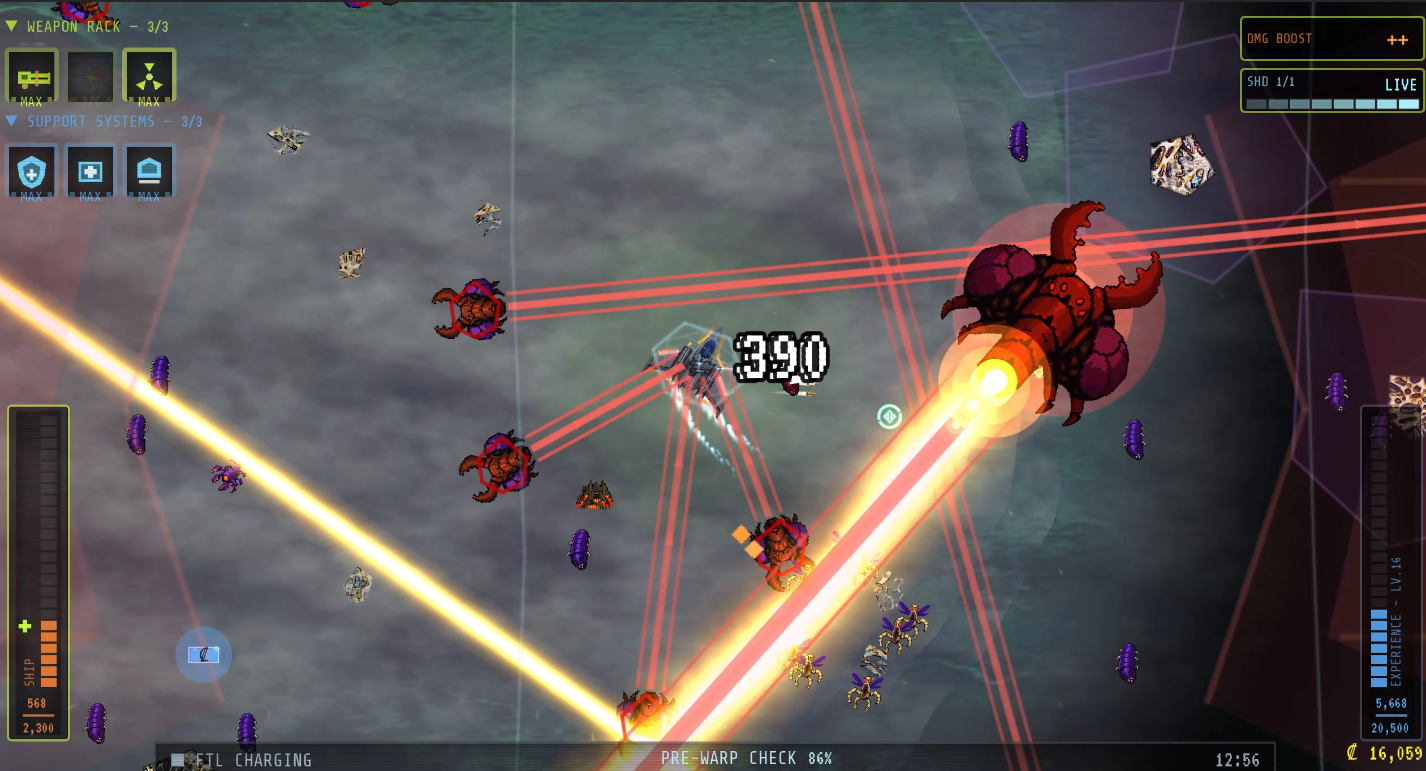
We made the Viridian Storm fight fair.
The Viridian Storm was landing on players like a brick wall — waves stacking on waves with no room to read them. We rebuilt how the whole stage schedules its threats. The lesson we kept coming back to is already codified in Stage 1: introduce one thing at a time.
Threats now arrive one family at a time, each with a breather behind it, so you're solving one problem instead of three at once.
Elites hit softer and slower through the early minutes.
The offscreen beam gauntlets wait until they actually have line of sight before they open up, and they're capped so the screen can't drown.
It's still our hardest stage yet, but there is nothing more satisfying than watching a Mega Beamer disintegrate its own brethren.
Cyrex got a real fight
Cyrex is what waits at the end of Viridian Storm. An agile slasher tyrant with a proper attack combo, a beam, and a phase change where he lobs an egg across the arena. And you can hit him where it counts: shots register against his skull, claws, abdomen and tail instead of one floating hitbox, so aiming for the exposed part is a real decision. Closer to a Diablo 2 boss than a survivor-like damage sponge.
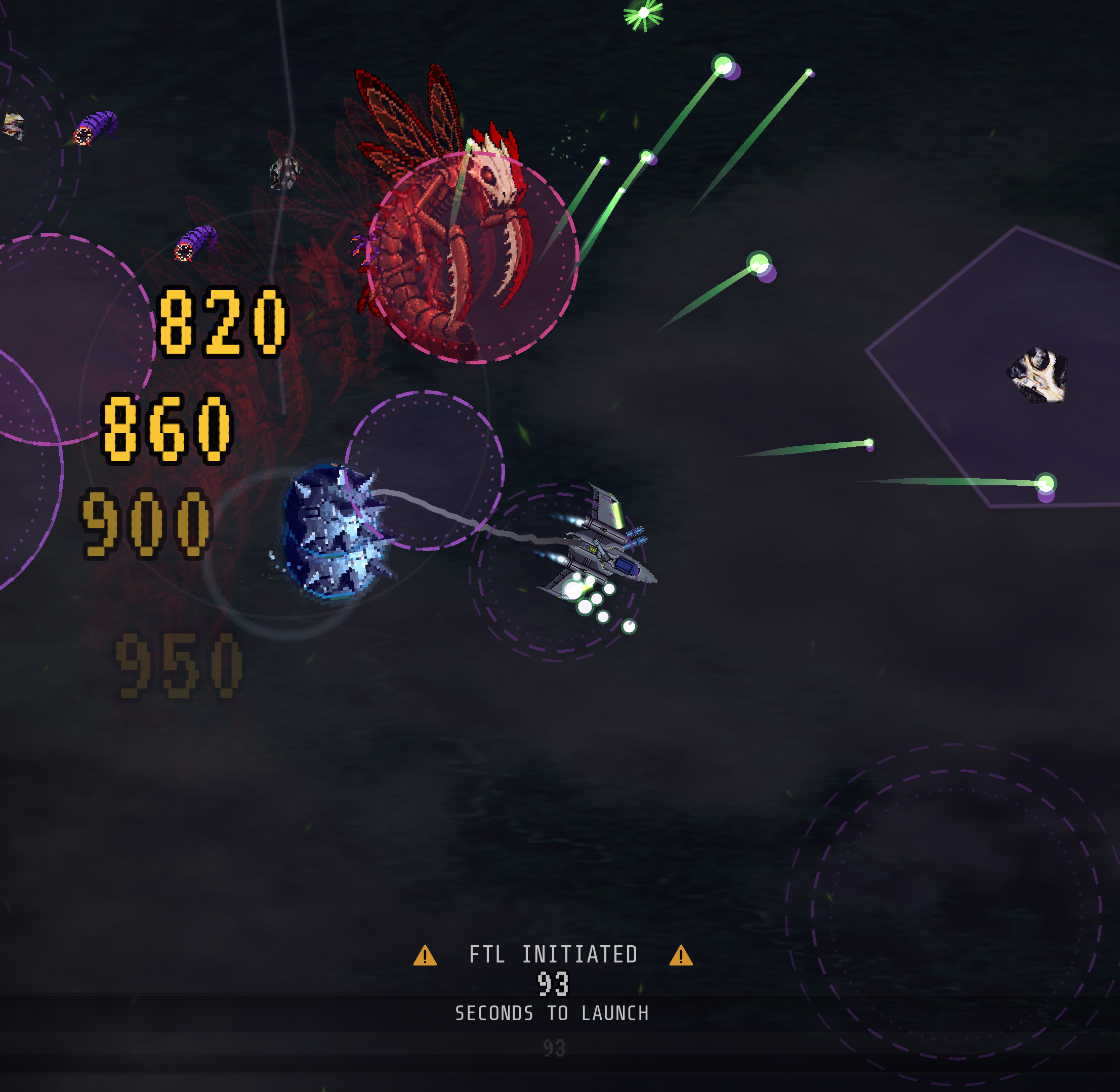
You can find the eye now
The Viridian Storm is built around its Eye — a moving safe zone you want to track. Finding it used to mean squinting at an off-screen arrow that looked like three other cues. Which is a fair moment to admit that at one point the storm's lightning, the reward ring, your shield, the XP gems and the level-up sigil were all drawn as blue hexagons of slightly different sizes. We pulled them apart. The storm's lightning is violet now, so it reads as weather rather than instrumentation, and the eye lives on a permanent HUD compass instead of an arrow you lose in the noise.
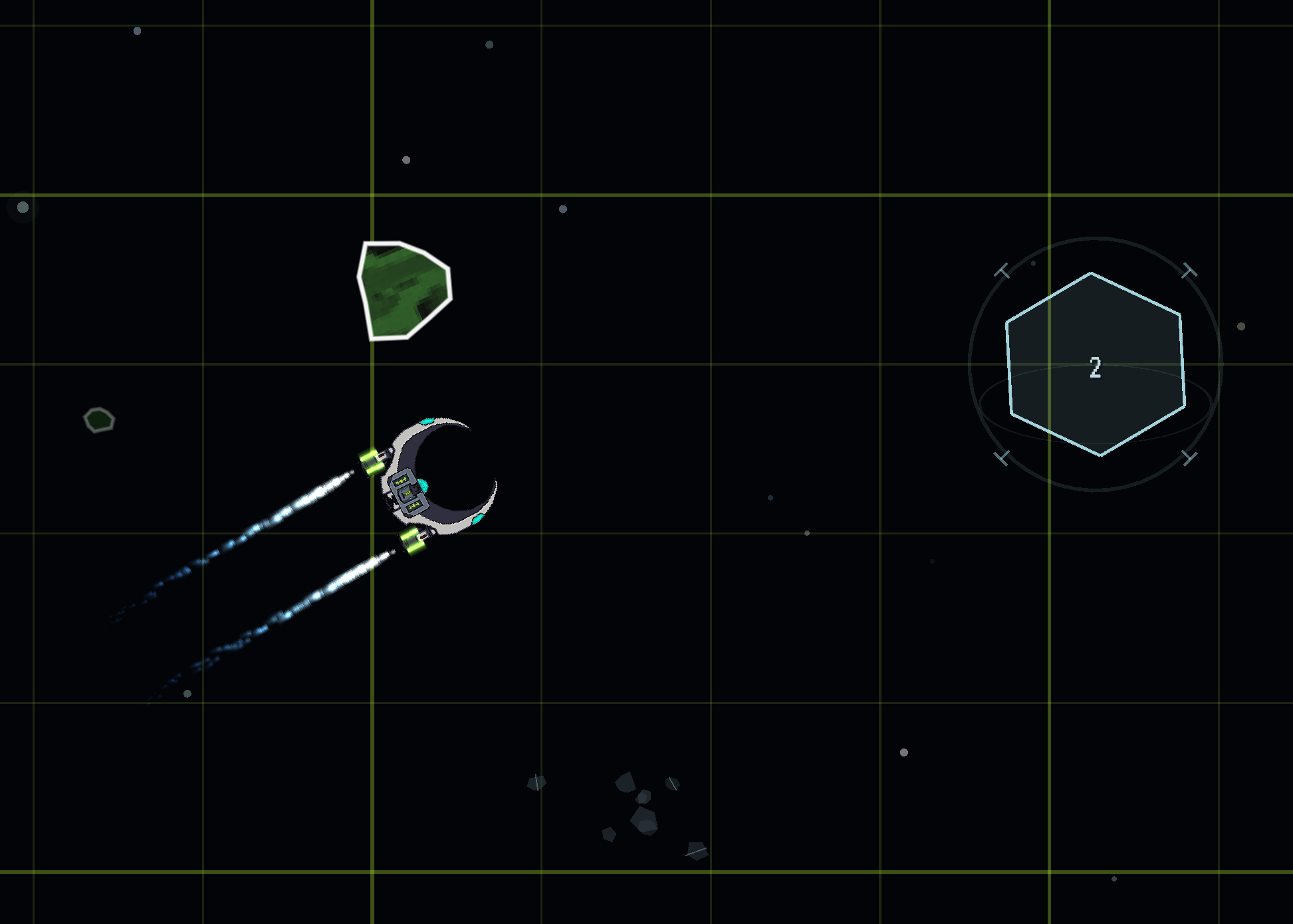
The Crescent Moon has a face
The fifth ship in the roster, the Crescent Moon, finally has its own hull art and phase-shift readiness read. It's the ship that asks for more skill than the rest of the roster. Next will be working on its unique spin on phase-shift. We're thinking something with more strategic depth, like the movement of a knight in chess.
Also this month
- Weapons read cleaner. The Flamer is a proper cone with real reach, the Plasma Cannon picks a target on each side independently, and the Kepler Chain's blast scales with the rock it hits.
- A native pause menu and an options panel, with accessibility and haptics settings — the first slice of a larger accessibility foundation we've been laying.
- The game boots through a CRT power-on now: a photosensitivity notice, then the terminal warming up into the Start Screen.
- A new power option that lets the game ease off the hardware when the action's light, without changing how it plays.
- A lot of unglamorous work under the storm fields, so the busiest moments hold their frame rate better and some sweet sweet VFX juice.
Where next
Stage 2 was the July program. August splits between the Crescent Moon's phase-shift design and the long tail of items still on the Supanova list — offscreen-threat legibility, mid-run camera behaviours, more weapon clarity. Dispatches will keep updating as things land.
If you'd rather watch the game come together than read about it, the Steam page has the trailer and the wishlist button. Both help.